100% Bonus Depreciation for Shuttle Bus Fleets: What Commercial Operators Need to Know for 2026 and Beyond
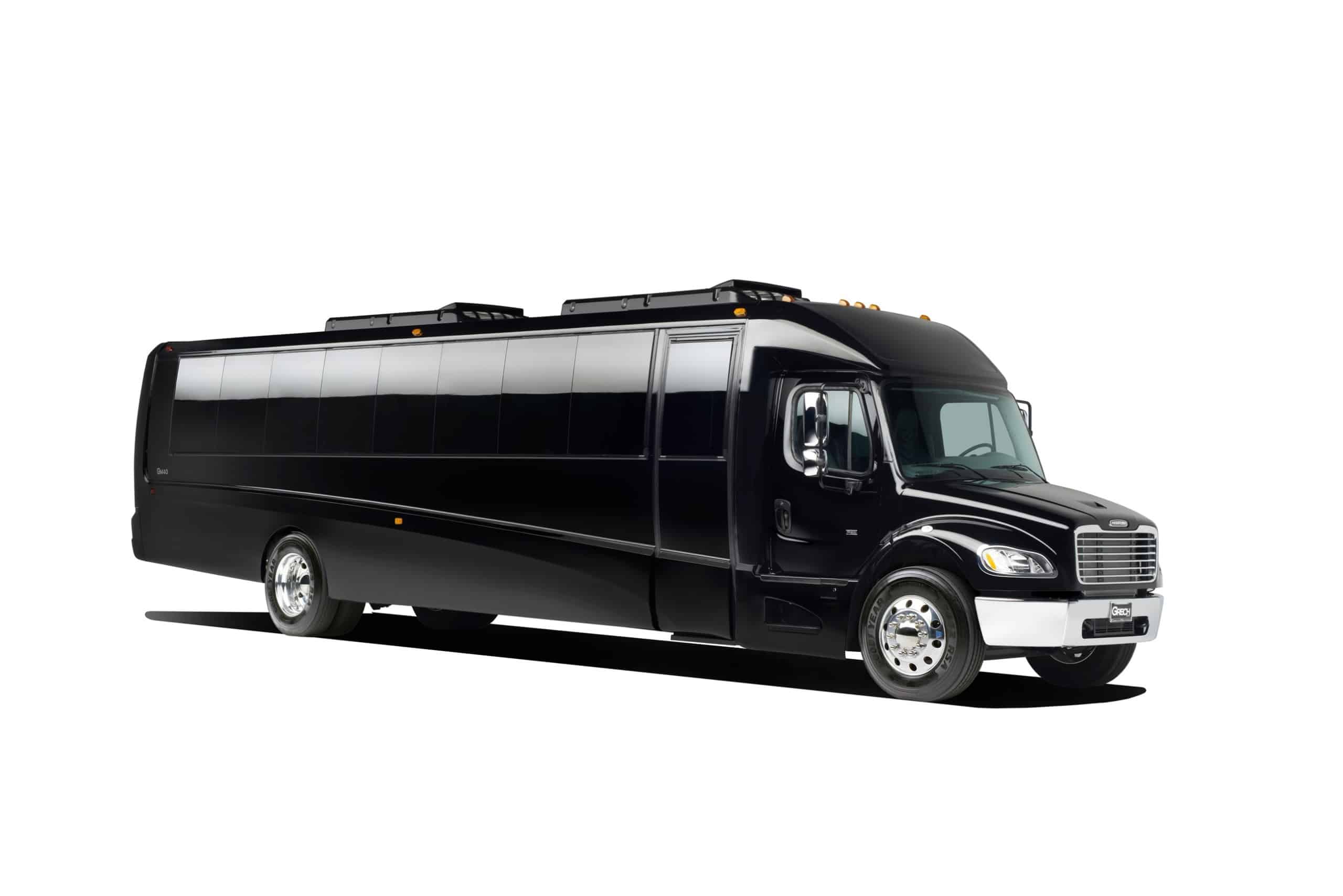
For commercial fleet operators, 100% bonus depreciation is now a permanent feature of the federal tax code. A business that buys a qualifying shuttle bus can deduct its full cost in the year the bus is placed in service, with no dollar cap and no scheduled expiration. The only hard date on the calendar is December 31 of whichever year you want the deduction to land in.
This guide is written for operators planning fleet purchases in 2026 and the years ahead. It covers how bonus depreciation works for commercial shuttle buses, why Grech’s chassis platforms are well positioned for full first-year expensing, what the deduction could look like on a typical purchase, how your financing structure affects who gets it, how Section 179 fits alongside it, and how to time a delivery so the deduction falls in the year you intend.
The short version: Qualifying new and pre-owned commercial vehicles acquired after January 19, 2025 may be eligible for a 100% first-year bonus depreciation deduction. To claim it on a 2026 return, a calendar-year business generally needs the bus ready and available for use by December 31, 2026.
Please read this first. Grech Motors builds buses. We are not tax advisors, and nothing in this article is tax, legal, or accounting advice. The rules below have exceptions, income limits, state-level differences, and timing traps that depend entirely on your business. Before you make a purchase, sign a lease, or time a delivery around a tax outcome, put the actual quote in front of a CPA or tax attorney who knows your situation. That one conversation is worth more than anything you’ll read here.
How 100% Bonus Depreciation Works
Bonus depreciation lets a business deduct the cost of a qualifying asset in the year it is placed in service, rather than spreading that deduction over the asset’s recovery period (five years for a bus). Under current law, the first-year bonus percentage is 100%, and it is permanent. There is no phase-down schedule and no sunset date to plan around.
Both new and pre-owned vehicles can qualify, provided a used bus is new to your business, was not purchased from a related party, and meets the acquisition rules. Bonus depreciation applies automatically unless you elect out. There is no dollar limit and no taxable-income limit, which means a fleet operator can expense several buses in one year, and the deduction can create a net operating loss that carries forward to offset future income.
For operators, the practical effect is that the purchase decision can be driven by fleet needs rather than by a shrinking tax percentage. The incentive is stable from year to year. The only timing question is which tax year you want the deduction to fall in.
| 100% bonus depreciation at a glance | |
|---|---|
| First-year deduction | 100% of qualifying cost |
| Dollar cap | None |
| Taxable-income limit | None (can create a loss) |
| New and used vehicles | Both qualify, subject to acquisition rules |
| Business-use requirement | More than 50% |
| Expiration | None under current law |
| Election | Applies automatically unless you elect out |
Where Section 179 fits
Section 179 is a related first-year expensing tool that your advisor may use alongside bonus depreciation. It lets a business elect to deduct the cost of qualifying equipment up to an annual cap, with the cap phasing out dollar-for-dollar once total qualifying purchases for the year pass a threshold. Both figures are indexed for inflation. For tax years beginning in 2026:
| 2026 Section 179 figure | Amount |
|---|---|
| Maximum Section 179 deduction | $2,560,000 |
| Phase-out begins when qualifying property placed in service exceeds | $4,090,000 |
| Business-use requirement | More than 50% |
| Can the deduction exceed business taxable income? | No (unused amounts carry forward) |
With bonus depreciation at a permanent 100%, many operators never need to touch Section 179 at all; bonus depreciation alone expenses the full cost of the bus. Section 179 still matters in a few situations: it is elected asset by asset, so it gives more control over how much to deduct in a given year; it is the only one of the two that some states (including California) partially recognize; and some advisors apply it first and let bonus depreciation cover the rest. Section 179 cannot take your business income below zero, while bonus depreciation can. Which approach is right for you depends on your entity type, taxable income, state conformity, and what else you bought during the year. That’s a conversation for your CPA, not a blog post.
Why Commercial Shuttle Buses Are Well Positioned
Business buyers of passenger vehicles usually run into two ceilings: the “luxury auto” depreciation caps that limit bonus depreciation on vehicles under 6,000 lbs GVWR, and a separate Section 179 sub-limit (around $32,000 for 2026) that applies to heavy SUVs. Neither one is designed with a 14-passenger commercial shuttle in mind, and the tax code treats true commercial passenger vehicles differently.
Every Grech bus platform sits well above the 6,000 lb line, and the SUV sub-limit carves out vehicles designed to seat more than nine passengers behind the driver, as well as vehicles rated above 14,000 lbs GVWR. For reference:
| Grech chassis platform | Approximate GVWR | Typical application |
|---|---|---|
| Mercedes-Benz Sprinter 3500 / 4500 (13 to 14 passengers) | ~11,000 to 12,100 lbs | Hotel, senior living, executive and airport shuttles |
| Ford E-450 (GM28, 22 passengers) | ~14,500 lbs | Mid-size shuttles, paratransit, church and campus transportation |
| Ford F-600 (GM33, 28 passengers) | ~22,000 lbs | Larger mid-size shuttles, parking and hospitality routes |
| Freightliner S2 (GM40 / EG40, 40 to 44 passengers) | ~19,000 to 26,000 lbs | Large luxury shuttles, parking, transit and tour operators |
The upshot: when a Grech bus is used in a business and meets the other requirements, it is generally the kind of asset for which full first-year expensing is available, rather than one that gets trimmed by passenger-vehicle caps. Confirm the classification of your specific vehicle and use case with your advisor, but the structural fit is a good one.
What a Deduction Could Look Like
Example: one 14-passenger Sprinter shuttle placed in service in December 2026
A hotel operator takes delivery of a Grech 14-passenger Sprinter shuttle at $149,900 and has it titled, insured, and running airport loops before December 31, 2026. If the vehicle and transaction meet all requirements for 100% bonus depreciation, the business may be able to deduct the full $149,900 on its 2026 return.
At a 21% federal corporate rate, that deduction reduces federal income tax by roughly $31,479 in year one.
Example: two 40-passenger GM40 Freightliner shuttles for a parking operator
An off-airport parking company adds two Grech GM40 Freightliner S2 shuttles at $269,900 each, or $539,800 total. With the same assumptions, the full $539,800 may be deductible in 2026, for a potential federal tax reduction of about $113,358.
Prices shown are current list prices from grechmotors.com/inventory as of this writing and are subject to change.
These examples are illustrative only. They assume a C corporation with enough taxable income to absorb the deduction. A deduction reduces taxable income; it is not a rebate on the purchase price. Actual results depend on your entity type, taxable income, state rules, financing structure, and other deductions. Pass-through businesses (S corporations, partnerships, LLCs, sole proprietors) are taxed at the owners’ individual rates, which changes the math entirely. Do not use these numbers to make a decision; have your tax professional run your actual figures.
How You Pay for the Bus Affects Who Gets the Deduction
Bonus depreciation and Section 179 go to the party treated as the owner of the vehicle for federal tax purposes. For a bus, that is usually you, whether you pay cash, finance it with a loan, or acquire it under a finance lease (often called a balloon lease). In each of those structures, the vehicle goes on your books, you depreciate it, and you take the deduction.
The finance lease deserves a closer look because it is the structure most bus operators actually use when they want to hold down the upfront cost. A finance lease works like a loan with a reduced monthly payment and a larger balloon payment at the end of the term, which you can pay off, refinance, or satisfy by selling or trading the bus. Because the agreement is structured as a conditional sale, with the bus titled or financed in your name and the balloon representing your remaining obligation, you are generally treated as the owner for tax purposes and the bus is eligible for 100% bonus depreciation the same as a cash purchase.
That is different from an operating lease or TRAC lease, where the leasing company owns the vehicle, takes the depreciation, and you simply deduct the lease payments. Those structures are common in the trucking world but are not how most shuttle bus fleets are acquired, and they do not give you the first-year deduction.
| Cash purchase | Loan (installment financing) | Finance lease (balloon lease) | |
|---|---|---|---|
| Who owns the bus for tax purposes | You | You | Generally you |
| Eligible for 100% bonus depreciation / Section 179 | Yes, if other requirements are met | Yes, if other requirements are met | Generally yes, if structured as a conditional sale and other requirements are met |
| Upfront capital | Full price | Down payment | Lowest; reduced monthly payment with a balloon at the end |
| Monthly payment | None | Higher (fully amortized) | Lower (partially amortized) |
| End of term | You own it outright | You own it outright | Pay or refinance the balloon, or sell or trade the bus to cover it |
| Best fit | Operators with capital on hand | Operators who want the bus paid off at term end | Operators who want the deduction plus the lowest monthly cash outlay |
Grech Motors offers in-house financing and finance lease (balloon lease) programs through Edson Financial. Our sales team can run both a conventional loan and a balloon structure on the same bus so you can compare the monthly numbers side by side. Whichever path you choose, have your tax advisor review the actual agreement before you sign; the tax treatment follows the contract terms, not the name on the brochure.
Why December 31 Matters Every Year
A permanent provision does not mean the calendar stops mattering. For a calendar-year business, a deduction belongs to the tax year in which the vehicle is placed in service, and the IRS treats a vehicle as placed in service when it is ready and available for its intended business use. Signing a purchase order in December does not do it. Neither does a bus sitting at the factory with a delivery date in January. Whether you’re buying this year or planning for 2027 and beyond, the question is the same: which year do you want the deduction in, and will the bus be working by December 31 of that year?
For a final-stage manufactured vehicle like a Grech shuttle, that means accounting for the full timeline: chassis availability, build completion, final-stage certification, pre-delivery inspection, transport from our Riverside, California facility to your location, titling and registration, insurance, and any lettering or ADA equipment you need before the bus can go to work. Custom builds take longer than in-stock units, so an order placed mid-year may or may not land before December 31. Plan the tax year around a realistic delivery date, not the other way around.
Five steps for any year you plan to buy
- Identify what needs replacing. Look at age, mileage, downtime, and any routes or contracts you’re adding next year.
- Check in-stock inventory first. A bus already built and sitting at Grech’s Riverside facility can be in service in weeks. Browse what’s available at grechmotors.com/inventory, or call Grech Sales at 855-994-7324. A custom build may not land before year-end, which is fine if you’re planning the deduction for the following year instead.
- Pick the financing structure with your advisor. Ask Grech Sales for both a conventional loan quote and a finance lease (balloon) quote on the same bus, then take both to your CPA so the tax and cash-flow comparison is based on real numbers.
- Lock down the delivery and prep timeline in writing. Confirm the date the vehicle will be titled, insured, and ready to run, not just the ship date.
- Document business use, and keep it there. Keep records showing the vehicle is used more than 50% for business. Mixed-use vehicles can lose part or all of the deduction, and if business use drops to 50% or below in a later year, the IRS can require you to recapture (pay back) part of what you deducted.
Tax Savings Are a Reason to Act, Not the Reason to Buy
A deduction improves the economics of a bus you already needed. It doesn’t make a bus you didn’t need a good idea. Reliability, passenger experience, operating cost, warranty support, and resale value all matter more over a 10-year service life than the first-year tax treatment. The best outcome is a vehicle that earns its keep every day and also happens to land in the right tax year.
That’s where Grech tries to help: coach-built commercial shuttles on proven Sprinter, Ford, and Freightliner chassis, a sales team that can quote real build and delivery dates, and in-stock inventory for fleet operators who need a vehicle working before the calendar turns.
Frequently Asked Questions
Does 100% bonus depreciation apply to a used shuttle bus?
It can. Pre-owned vehicles qualify as long as they are new to your business, were not acquired from a related party, and meet the other requirements. The acquisition date rules still apply.
What if my bus is delivered in December but not titled until January?
Placed-in-service generally means ready and available for use, which usually requires that the vehicle be legally operable. If titling, registration, or insurance slips into January, the deduction may slip to 2027. Build those steps into your timeline.
Can I take bonus depreciation on a bus I acquire through a finance lease (balloon lease)?
Generally yes. When a finance lease is structured as a conditional sale, you are treated as the owner for federal tax purposes and the bus can qualify for 100% bonus depreciation and Section 179 just as a financed purchase would. The balloon payment at the end is simply the remaining balance you owe. A true operating lease or TRAC lease works differently: under the tax code the lessor is treated as the owner and takes the depreciation, and you deduct the lease payments instead. The label on the agreement does not decide the treatment; the terms do. Have your advisor confirm the treatment of the specific agreement before you sign.
Can I use both Section 179 and bonus depreciation on the same bus?
Yes. Many businesses elect Section 179 on part of the cost and apply bonus depreciation to the remainder, or simply use bonus depreciation alone. Section 179 cannot create a net loss, while bonus depreciation can, which is one reason the right mix differs from one operator to the next.
Does my state follow these rules?
Not always, and the gap can be large. California, for example, does not allow bonus depreciation at all and caps its own Section 179 deduction at $25,000, with a phase-out starting at just $200,000 in purchases. A California operator who deducts a $149,900 bus in full on the federal return will add most of that back on the state return and depreciate it over several years. Arizona, New Jersey, Maryland, and several other states have similar non-conformity rules; others conform fully. Ask your advisor about both federal and state treatment before you decide.
I have an older bus order still on the books. Does it get 100%?
Usually yes for any order placed in 2026 or later. The one exception involves orders placed under a written binding contract before January 20, 2025, which can fall under an older, lower depreciation schedule regardless of delivery date. If you have an order that old still pending, have your advisor review the contract date.
Will these rules still apply if I buy in 2027 or 2028?
Under current law, yes. The 100% bonus depreciation rate has no scheduled end date, and the Section 179 limits adjust upward for inflation each year. Tax law can always change, so confirm the current figures with your advisor at the time of purchase, but there is no built-in deadline forcing you to buy before a certain year.
Is there a deadline to buy before the provision expires?
No. 100% bonus depreciation has no scheduled end date. December 31 matters only for determining which tax year the deduction falls in.
Planning Your Next Shuttle Bus Purchase?
The Grech Motors sales team can walk you through in-stock buses ready for delivery now, quote realistic build and delivery dates on custom orders, and put together a written quote you can take to your tax advisor so the purchase lands in the year you intend.
Call 855-994-7324 or email Sales@GrechMotors.com to speak with the Grech Motors sales team. We can help you with the bus and the timeline. Your tax professional is the one to call about the deduction.
Important disclosure. Please consult your tax professional.
This article is published by Grech Motors for general informational and educational purposes only. It is not, and should not be relied upon as, legal, tax, accounting, financial, or investment advice, and it does not create any advisory relationship between Grech Motors and the reader. Grech Motors, its affiliates, and its employees are not tax advisors, are not licensed to provide tax advice, and make no representation or warranty, express or implied, regarding the accuracy, completeness, or applicability of the information presented to any particular business or transaction.
Federal and state tax laws are complex, change frequently, and are applied differently depending on your entity type, taxable income, state of operation, the specific terms of your purchase or lease, the date a binding contract was signed, how the vehicle is used, and many other factors. The provisions discussed, including bonus depreciation under IRC Section 168(k) and expensing under IRC Section 179, are subject to eligibility requirements, dollar limits, taxable-income limits, recapture rules, and state non-conformity that may reduce or eliminate any benefit described here. The numerical examples are hypothetical, use simplified assumptions, and are not a projection or guarantee of any tax result. A tax deduction reduces taxable income; it is not a cash rebate, discount, or reduction of the vehicle’s purchase price.
Figures reflect federal law and IRS guidance (including the One Big Beautiful Bill Act, Rev. Proc. 2025-32, and IRS Notice 2026-11) as understood by Grech Motors as of November 2026, and may be outdated by the time you read this. Grech Motors has no obligation to update this article.
Before purchasing, leasing, financing, or timing the delivery of any vehicle based on an expected tax outcome, you should consult a qualified Certified Public Accountant, Enrolled Agent, or tax attorney who is familiar with your business and can evaluate your specific circumstances, including applicable state and local law. Grech Motors expressly disclaims any liability for decisions made in reliance on this article.
In-house financing and finance lease (balloon lease) programs are offered through Edson Financial to qualified buyers, subject to credit approval; rates, terms, and balloon amounts vary. Whether a particular finance lease qualifies the lessee as the tax owner of the vehicle depends on the specific terms of that agreement and must be confirmed by your tax advisor. Vehicle pricing, availability, and specifications are subject to change without notice. GVWR figures are approximate and vary by configuration; refer to the certification label on the specific vehicle.
